Lance Devore
Bag of BonesLance Devore is a forestry student, softball player, husband to Mattie Devore, and father to Kyra Devore, whose brief life binds the TR’s welcoming local community to the family conflict set in motion by his father, Max Devore. He finds love and belonging in a life far from his father’s wealth, then dies in an accident before he can raise his daughter; his defiance of Max becomes part of the inheritance of conflict left to Mattie and Kyra.
Background and arrival
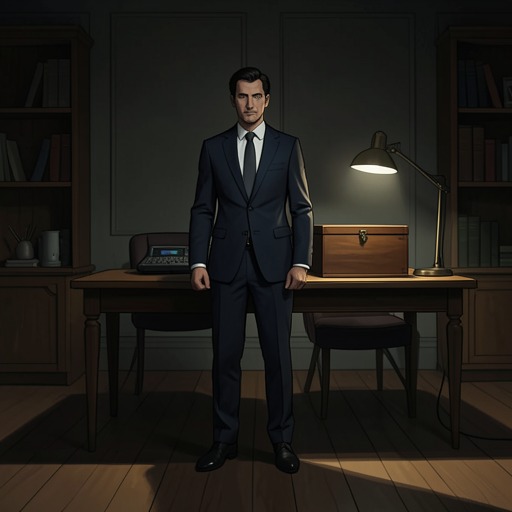
Lance is the only child of Max Devore’s later years. He attended Reed College in Oregon, where he majored in forestry. During the summer between his junior and senior years, Max summoned him to the family compound in Palm Springs and gave him a lawyer’s suitcase full of maps, aerial photographs, and legal documents. The papers showed Lance the scale of his father’s holdings in the forests of western Maine: not merely a few acres, but extensive tracts of land.
Max had left the TR in 1933 but maintained an interest in the region. In the early 1980s he began buying long strips of land east of the Maine–New Hampshire border, much of it formerly held by paper companies retreating from the area. The evidence does not establish precisely what Lance made of his father’s property or the motives behind Max’s purchases, but the inheritance of land and wealth forms the backdrop to Lance’s choice of a life far removed from his father’s authority.
Life in the TR
Lance was twenty-one when he met Mattie, who had just turned seventeen and was working a summer job as a waitress at Warrington's Lodge. He was tall, gangly, and red-haired, and he stuttered. On Tuesday evenings he usually canoed across from the Upper Bay to play in the pickup softball games at the lodge, where local residents and summer visitors mixed on the field.
The players did not insist that Lance choose one side. He sometimes played for the locals and sometimes for the visitors, and both teams welcomed him. His powerful hitting and agile fielding mattered more than his family name or the fact that he was wealthy. The games offered him an ordinary social place in which his father’s reputation did not define him.
Mattie later remembered those evenings as a time of shared fun rather than hostility. Lance played hard but was not reckless; the players competed intensely, while their families and friends watched from behind the backstop, shared drinks, and joked together. Afterward, the group might go to the Village Cafe for pizza, with the losing side paying. Lance’s place in this community was personal and uncomplicated: he belonged because he played, laughed, and spent time with the others.
Meeting Mattie and family life
Lance and Mattie met on the softball field through an everyday mishap. Mattie was pushing a keg of beer on a handcart toward the field when the cart bogged down in a muddy patch left by earlier rain. Lance, waiting his turn to bat, got up from the bench and helped her. Within three weeks they were inseparable, and Mattie was pregnant; they married ten weeks later.
Their marriage began despite Max’s direct effort to separate them. In August 1994, after Lance told his father that he and Mattie planned to marry in mid-September, Max offered Mattie $100,000 to leave. A week later he raised the offer to $200,000. Mattie initially kept the first offer from Lance, but she told him about the second. Lance was furious and called Max, making clear that the wedding would go ahead and that Max would have to behave if he wanted to see his grandchild.
Lance’s stutter worsened when he was upset, making a phone conversation difficult. In response to his father’s conduct, he sent an email instead. He told Max that neither he nor Mattie wanted further contact, that Max would not be welcome in their home or allowed to visit after the baby’s birth, and that any gift sent to the child would be returned. The break was not a temporary disagreement: Lance’s message set a firm boundary against further interference in his marriage and family.
Conflict with Max and death
Max responded to Lance’s refusal with anger rather than reconciliation. He dismissed his son from the surveying job, leaving Lance to find other work. Lance’s decision to marry Mattie therefore carried a practical cost as well as a family rupture: he refused Max’s money and influence, while Max used his control over employment to punish him.
The estrangement had not been resolved when Lance died. In the afternoon before a storm, he installed a small satellite dish at the trailer and then remembered that his socket wrench was on the roof. As he came down the ladder to retrieve it, lightning struck a tree nearby. The bolt did not hit Lance, but the close strike frightened and startled him, and he fell from the ladder.
Mattie did not hear him fall over the storm. A short time later, when hail began and Lance had not returned, she looked outside and found him on the ground. He had broken his neck in the fall. The accident ended his marriage and young fatherhood only thirty-seven months after the couple met, turning their early promise into an unfinished family life.
Legacy and narrative role
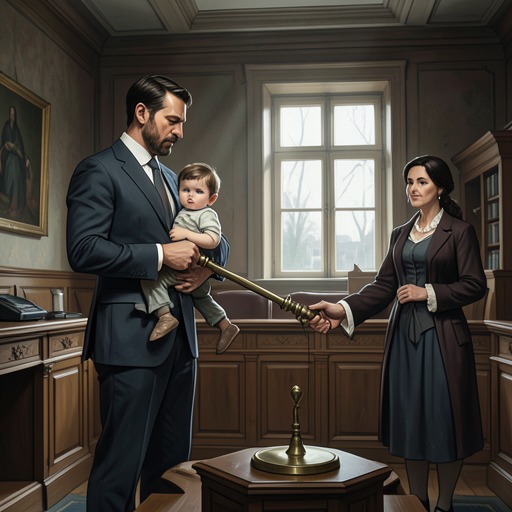
Max had refused to attend Lance and Mattie’s wedding, but came east for his son’s funeral and remained in the area afterward. His changed presence did not erase the earlier conflict: he had tried to buy Mattie’s departure, Lance had barred him from the family home, and Lance’s death left Max able to seek access to Kyra without his son there to oppose him. Mattie’s account and the narrator’s understanding of the custody conflict place Lance’s absence at the center of the later struggle over his daughter.
Lance is recalled through contrasts rather than through a long independent arc: a wealthy heir who was accepted on the playing field for his skill; a stuttering young man who nevertheless confronted his father; and a new husband and father whose ordinary plans were cut short by an accident. The softball field, where social divisions temporarily mattered less than play, stands against Max’s attempt to make money and family authority decide whom Lance could marry. His brief life thus explains both Mattie’s loss and the conditions under which Max’s campaign for a relationship with Kyra takes shape.